
Endnu et bidrag udefra: Hongkong-avisen South China Morning Post har publiceret et interview med et af de mest kyndige individer på den fjernøstlige scene: Singapores tidligere udenrigsminister (2004-2011) George Yeo. Den tekst rummer så megen indsigt at jeg bringer den her. God læselyst!
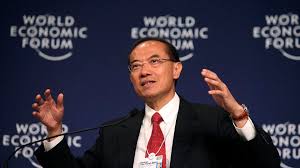
George Yeo on superpower ‘headaches’
South China Morning Post
December 21, 2025
George Yeo is a visiting scholar at the National University of Singapore’s Lee Kuan Yew School of Public Policy.
He started his career in the military before entering politics in 1988. During his 23 years with the Singaporean government, Yeo held ministerial portfolios ranging from arts to health, trade and – for seven years – foreign affairs.
After he left politics, Yeo was vice-chairman of Kerry Group in Hong Kong from 2012 to 2021 and chairman and executive director of its logistics arm from 2012 to 2019.
First to Taiwan, which you’ve described as a ticking time bomb. How can it be defused, and how likely is a military conflict across the Taiwan Strait?
We don’t have crystal balls. Politics develops often in unexpected ways. In our minds, we have to think of scenarios. Now imagine the day when, for lack of money, the US has to leave the western Pacific because voters choose butter over guns. That’s one possible scenario. Then unification will happen naturally because I don’t see Taiwanese dying for an independent Taiwan.
Taiwan is separate only because the US is there. The Taiwan issue is a subset of US-China relations. Right now [US President Donald] Trump doesn’t want Taiwan to be an issue because he’s got a big agenda with China. That’s why he did not allow [Taiwanese leader William] Lai Ching-te to make a stopover in the US. It caused Lai to cancel his trip to Paraguay.
And when [Chinese President Xi Jinping and Trump] met in Busan recently, they did not even talk about Taiwan. That was a strong signal to the Taiwanese that the US doesn’t want Taiwan to spoil their negotiations with China. For China, Taiwan is not for negotiation.
Taiwan as part of “one China” is the basis of US-China relations. The US understands this. Whether or not there is trouble over Taiwan depends on the US. China has drawn a very clear red line. The US knows that if it wants trouble with China, it can move towards and cross the red line. If it doesn’t want trouble with China, it moves away from it.
Of course, the US will never say that it won’t intervene militarily if China uses force to take back Taiwan.
China’s overwhelming preference is peaceful reunification for which it cannot abjure the use of force. How Taiwanese politics develops in response to these dynamics, we’ll have to wait and see. There is growing realisation that the road to independence is a dead end.
A US-China war over Taiwan is highly unlikely in the short term. In another five years, the change in the relative strength between the US and China will make it harder for the US to prevent or delay China’s reunification.
This is already affecting the way people think in Taiwan, including younger Taiwanese. If the young people of Taiwan build their hopes on an illusion – as the young people in Hong Kong once did – it will only lead to tragedy.
Therefore negotiating earlier with Beijing is better than negotiating later, which was [Singapore’s first prime minister] Lee Kuan Yew‘s point many years ago. Taiwan can enjoy more autonomy by negotiating now rather than waiting another 10 years.
Taiwan has its own strengths and can contribute much to China’s long-term development. My favourite two examples are [semiconductor firm] TSMC and [humanitarian organisation] the Tzu Chi Foundation, which are unique to Taiwan and cannot be easily replicated on the mainland.
Taiwanese leaders should think deeply about what Taiwanese people need to maintain a high degree of autonomy. Only with a high degree of autonomy can Taiwan be different and therefore able to enhance China as a whole. A full integration of Taiwan to the mainland is of much lesser use to the mainland and the world.
What’s your take on the latest row between Beijing and Tokyo over Taiwan?
I put this possibly to Sanae Takaichi‘s newness to her position as prime minister. She might not have realised the gravity of her remarks. She is now stuck – retracting those remarks is a loss of face.
Or, it may be that she made her remarks deliberately, in order to provoke a strong reaction from China and use that to win popularity and justify higher defence spending, thinking that the US will back her.
But Trump wants stable relations with China for the rest of his term and doesn’t need this additional problem with China. After speaking to Xi Jinping, he has asked Takaichi to lower the temperature. China will not make it too easy for her because it has to deter similar actions in the future, not only by Japanese leaders but also by the leaders of other countries.
I think the Chinese will now reopen the Ryukyu issue – not officially, but through social media and other unofficial channels. Ryukyu as part of Japan was never part of the deal among the victorious powers at the end of the second world war. There was only agreement for Japan to retain the four main islands.
At that time Chiang Kai-shek, and later Mao Zedong, decided not to make Ryukyu an issue. China could have but did not. It is not wise for Takaichi to give China this opening by tying Taiwan’s security to Japan’s.
The depth of Chinese emotion over Taiwan should not be underestimated. [Henry] Kissinger wrote about it repeatedly – how in his negotiations with Zhou Enlai and Mao, they kept going back to Taiwan and one China.
How can they ever forget that it was Japan’s aggression which separated Taiwan from the mainland in the first place?
Raising Ryukyu as an issue will deter Japanese politicians from being adventurous on Taiwan. I don’t think China wants to escalate but they want Takaichi to climb down.
Some loss of face for her is inevitable but it won’t be too much because, in the end, China does want good relations with Japan. And that is also in Japan’s interest.
How do you see US-China relations over the rest of Trump’s term?
Relations are stabilising but there will still be occasional turbulence. China was forced to play the rare earths card, which it did not want to for a long time. Once you play a card it begins to lose its value.
This card has been on the poker table since the Deng Xiaoping era in 1992. China expected the US to know it had this card. But the US ignored it, thinking that it could pressure China without China hitting back.
The US has no response to the rare earths card in the short term. Trump’s signing of new agreements on rare earths with other countries will reduce US dependence on China for the lighter rare earths after maybe five, eight years.
But for the heavy rare earths, China has a chokehold for which there is simply no way out for the US. Only China and Myanmar have heavy rare earths. Myanmar’s mines are near China and not accessible to the US.
This is not unlike the Tang monk putting a gold band around the head of Sun Wukong, the Monkey King, in the historical novel Journey to the West. Whenever Wukong became difficult, the monk’s mantra would tighten the headband. Wukong became the hero. It was Wukong who helped the monk bring sutras back to China.
In a sense, the US and China have put gold bands on each other’s heads – each can inflict severe headaches on the other.
The US has been systematically preventing critical technology flow to China. While the US can deny China Boeing jetliners, Pratt & Whitney and GE engines, engine spare parts, there is no certainty the Europeans will follow with an embargo on Airbus aeroplanes and Rolls-Royce engines.
This is China’s current vulnerability which it is working hard to overcome. Its fast-rail network will ensure that internal movement can still carry on.
On the other side, China’s denial of rare earths will bring down entire industries in the US and Europe. In such an extreme scenario, the world economy will plunge into depression.
What we now have is a situation of mutual deterrence, with each having a lock on the other. So long as rational minds are in charge, there will not be a blow-up. Unfortunately, leaders sometimes act irrationally.
Do you think the trade truce will last for a while at least?
A truce is likely for the rest of the Trump term. Trump certainly needs it for the midterms because if the economy takes a turn for the worse, his chances of keeping Republican control of both houses in Congress will diminish.
He doesn’t want to be a lame duck. He can issue executive orders but the Supreme Court may curtail him because of the constitutional separation of powers.
Trump therefore needs stable relations with China. He now talks about everlasting friendship between the US and China and asks God to bless both countries. God will certainly do so, but we must also pray.
You mentioned that Trump didn’t raise Taiwan when he met Xi. Is Trump putting Taiwan aside in the hope nothing major will happen?
Trump is transactional by nature. He has no strong feelings about Taiwan. I’m not sure how much he knows about Taiwanese society or cross-strait relations. When he first became president, he took a phone call from [then-Taiwanese leader] Tsai Ing-wen. He did not take advice, a little like the new Japanese premier. When asked, after backtracking, why he took the call from Tsai, he explained that Taiwan was an important customer. Taiwan is still an important customer for US weapons.
So should we expect arms sales to Taiwan to continue?
Yes, but it will be calibrated. It’s always been calibrated, and confined mainly to defensive equipment.Of course what is defensive and offensive can be unclear but the US will not go too far. They will certainly not supply advanced equipment to Taiwan.
Knowing that many Taiwanese are blue, the US cannot be sure that advanced technology supplied to Taiwan will not quickly leak into China. The military technology supplied to Taiwan is technology the US can afford to lose to China.
America is withdrawing from many areas on the global stage. Do you think the US is in decline?
US decline is a possibility about which Americans themselves worry. If you are a company, country or wealthy family, this is one of the scenarios that you’ve got to allow for. If the US does decline and the US dollar cracks, what do I do? How am I positioned? That’s one scenario.
Another scenario is the US succeeds in healing and revitalising itself. The US overcame a terrible civil war in the 1860s and emerged to become the world’s greatest country.
The Vietnam war period was wrenching, with campuses in turmoil all over the country, yet it recovered and was victorious at the end of the Cold War. Very few Asians believed that a black man could become an American president. [Barack] Obama served two terms.
US decline is something to worry about. US recovery after a period of intense internal struggle is also not to be dismissed. It has institutions which remain vital and incomparable.
So it is a possible scenario, but it’s not happening yet?
The US is in decline now. That’s why Americans talk about making the country great again. The question is: can it recover? No one knows. American society is deeply divided. Those on opposite sides view each other as enemies. From afar, it may look hopeless but those of us who studied or lived in America know that the country has deep strengths to draw on.
Even Americans themselves are not sure. At my recent 40th class reunion at the Harvard Business School, two old section mates asked me privately whether I thought the US was in decline. I was taken aback by the introspection.
No one has a crystal ball. Neither can we envisage all scenarios. History is full of surprises.
You just mentioned the possibility that the dollar might crack.
How could the position of the US dollar be sustained with the way the deficit is growing?
The hope of course is that the US can grow out of its debt. However, the reality is that if you have difficulty even servicing the debt, let alone repaying the original amount, one day you will have no choice but to monetise that debt. It is therefore wise not to hold too much of one’s assets in US dollars.
Elon Musk was going to put the finances right but failed miserably. When you look at the rising price of gold, it’s a sign of growing concern about the fiscal situation in the US.
The cookie is likely to crumble one day, but no one can be sure when or how.
Governments are doing the same? Are Association of Southeast Asian Nations members also shifting?
Central banks all over the world are building up their gold stocks. No prudent person or government can afford not to worry.
So apart from gold, are there alternatives for reserve currencies for countries?
Everyone has to diversify, and you can diversify in different ways. One is your currency portfolio, but it’s also your financial asset portfolio. It’s also your total asset portfolio and how you deploy your family. Even the languages you want your children or grandchildren to learn, and where you want them educated, are an indication of the future you anticipate.
It’s a big question. That’s why there are so many financial seminars and so many “experts” proffering advice to all and sundry.
There’s no easy answer. Some think that US Treasuries-backed stablecoins are a way to buy time for the US. It is too early to say.
Is there a higher chance for the success of a Brics currency when countries are looking for alternative reserve currencies?
No, I don’t see a Brics currency coming about. For a Brics currency to come about, the renminbi will have to be internationalised. China is only prepared to internationalise the renminbi that is circulating outside China, which is relatively small compared to the renminbi circulating inside China. China will never open its capital market fully because it does not want to lose control of its financial system to New York and London. Capital controls are an important China wall. Brics will, however, accelerate the growth of a payment and settlement system outside US control.
US weaponization of the financial system has engendered much resentment. Russia needs an alternative to Swift. China, India, Brazil and others want an alternative – not to replace the existing system but as a deterrent against egregious US behaviour.
China cannot forget its loss of control after the second opium war, when ships calling on ports along the coast and up the Yangtze were inspected by Westerners – mostly British. They collected tariffs, took what they considered their due, and handed over the rest to the Qing government. Once you lose control of the financial system, you lose the ability to govern.
To Venezuela, Trump has been exerting pressure on the South American nation. Is oil and gas the main consideration?
There’s no doubt that this is a key consideration for Trump. There are other considerations like the Cuban thorn in America’s side and Venezuela‘s antagonism towards Israel.
Trump recognises that the US is overextended. He wants US allies to pay for the protection the US provides them.
His wish is for the US to consolidate around its own hemisphere, not the entire Western hemisphere, because there’s Brazil which is its own pole, but certainly North and Central America and maybe also the northern part of South America. That’s one reason why he wants regime change in Venezuela.
Changing the name of the Gulf of Mexico to the Gulf of America reflects this new world view. That’s also why he wants Canada, Greenland and the Panama Canal. Such a US-dominant sphere will be formidable, with access to three oceans and control over vast resources. The National Security Strategy paper recently issued under Trump’s name envisages such a future.
So Trump wants to consolidate his own sphere and turn it into a polity?
He recognises that the US cannot dominate the world the way it used to in the past. The US hasn’t got the financial power or the manufacturing capability. So it has to retreat some and consolidate around its own core and concentrate on healing itself.
Of course, it doesn’t mean the US will give up on the rest of the world. They will still keep their relations with Europe. They will want to keep China contained. And they will still have capabilities in the western Pacific and the Indian Ocean for a long time. But it has to act with greater economy which means often not acting directly but acting to tip local balances in its favour. In this way, it can achieve more with less effort.
Trump recognises the reality of a multipolar world. The US is primus inter pares in such a world. By moving closer to all other poles, as Kissinger recommended, it will remain influential for a long time.
What does the emerging multipolar world order mean for smaller countries – especially those in Asean?
The US has some 800 military bases around the world, which is an aberration in human history. Sooner or later, the number will be reduced. As Pax Americana recedes, regional equilibriums will be affected. Local hegemons will emerge and many regions will be destabilised.
This is what happens whenever empires retreat. The fall of western Rome was accompanied by barbarian invasions. Europe plunged into the Dark Ages. The effects of the fall of the Ottoman Empire are still being felt all over the Middle East today. The decline of the Qing dynasty was a great drama leading to the establishment of the People’s Republic, and also the establishment of modern Singapore and Hong Kong.
In Asean, we have to protect ourselves. No matter how the configuration of major powers changes, if we stick together and stay neutral, giving each major power a vital interest in our integrity, then our life chances are good.
We don’t see China invading Southeast Asia. Sometimes I feel the Chinese think us rather troublesome. Our land borders with China have been delimited. There are tensions in the South China Sea because of overlapping maritime claims, but they are manageable. We certainly don’t want to get involved in Taiwan.
China is already our biggest trading partner. Every country in Southeast Asia expects China’s role to grow in the future. The collective will to strengthen Asean arises not from love of one another but out of a realistic assessment that we either hang together or we hang separately. Border conflicts like the one between Cambodia and Thailand will not get out of hand. Myanmar is at best a confederation and will neither be too good nor too bad.
We are in a good part of the world and should continue to grow. We want the US presence in Southeast Asia to remain but we are mentally prepared for it to be reduced in the future. If the US forces us to choose, the response may not be what it wishes.
Many people say the risks of military conflict in the South China Sea are high. What’s your view on that?
I don’t think the risks are high. Of the four claimant countries in Asean, Malaysia and Brunei have made practical arrangements with China. The communist parties of China and Vietnam have deep fraternal ties. Vietnam knows that however friendly the US is, given half a chance, the US will subvert the Vietnamese communist party.
Their conflict over claims in the South China Sea may boil over from time to time but won’t get too intense because of larger common interests. Vietnam’s recent decision to link Hanoi to Nanning and Kunming by high-speed rail signalled a strategic shift by Vietnam.
What about the Philippines?
I don’t see China’s relations with the Philippines getting too bad either because it is in neither’s interest. It may be in the US interest to see some conflict between the Philippines and China, but not too much. The US had a programme to discourage Filipinos from using Chinese vaccines during Covid. These little games will continue. But from a higher perspective, Southeast Asia is a sideshow for the US. The main show is in Northeast Asia, by which I mean Taiwan, Japan and the Korean peninsula.
There will be some kind of compromise between China and the Philippines in the end. For the time being, China is like a tai chi master playing with the Philippines. It must counter Philippine actions without causing the Philippines to fall. Otherwise it will be seen as a bully. That’s why it uses water jets and rubber pads. Both sides record events from all angles for an international audience to view. But accidents can still happen.
If you ask Filipinos whether they prefer China or America, many will of course prefer America. But economically, they know that China is becoming more important to their future. I therefore don’t see bilateral relations falling off the cliff. There could be sporadic incidents but they won’t get out of control.
[Former president Rodrigo] Duterte went too far in one direction being pro-China. [President Ferdinand] Marcos has gone too far in the other direction. A better balance will be found either for the rest of the current administration or in the next administration. The business community in the Philippines doesn’t like the tension. China is a huge opportunity for the Philippines to upgrade its infrastructure, reduce logistics cost and grow its economy. There is too much at stake for the Philippines.
There has been talk of Hong Kong losing out to Singapore in recent years, with many multinationals and companies moving to Singapore. How do you see Hong Kong’s position?
This is just idle bar chatter. I always remember what the second last British governor of Hong Kong, David Wilson, said to me. He likened the competition between Hong Kong and Singapore to that between Oxford and Cambridge. In other words, the rivalry is exaggerated for effect. Singapore and Hong Kong are as far apart as London and Moscow. How can either replace the other? You serve China, we serve a different region. We do compete peripherally. Each in fact strengthens the other.
What about in Southeast Asia?
Hong Kong should build up its position in Asean in all 11 countries. I’ve long recommended that Hong Kong should establish an external service of economic officials, with a strategic view of Hong Kong’s long-term position as China’s second system. Singapore can help and partner Hong Kong in this regard.
Many families and companies straddle both cities. The two airports are sisters, the two financial systems are linked, family members visit one another, companies deal with cities as one. Hong Kong has a great advantage because, unlike Singapore, it need not spend money on defence, external intelligence and foreign affairs. It does not need to worry about having its own power stations and water reservoirs. Singapore, small as it is, allocates much land to military bases, training areas and catchments. Our tiny airspace has to accommodate civil aircraft, fighter jets and helicopters. When I was head of planning in the Singapore Air Force, the approval of every tall building in Singapore had to clear my desk. Hong Kong carries no such burden and enjoys possibly a 10 percentage point advantage over Singapore. Remember China does not take one cent from Hong Kong. For Singapore, sovereignty is expensive and risky, but there is a joy in sovereignty. Singapore can never equal Hong Kong in knowledge of China or Hong Kong equal Singapore in knowledge of Southeast Asia. Sharing similar cultures and administrative systems, we complement each other more than we realise or admit.
What would be your advice to Hong Kong companies?
Why is Hong Kong a separate system? It’s not a separate system because of China’s charity. It’s a separate system because it meets an essential need of China going back 2,000 years ago when Qin unified the country. After the Lingqu Canal was built linking the Xiang and Li rivers, Qin forces brought Han culture all the way to the Pearl River Delta. Panyu was China’s first portal to the southern seas. China always needs a portal somewhere in the delta to control access to Southeast Asia and the Indian Ocean.
When the Portuguese came, Ming China gave Macau to Portugal so that they didn’t trouble the mainland. You do your trade, you don’t interfere in my affairs, and I let you function. It’s good for me, it’s good for you. Hong Kong played that role for the British East India Company. The British knew that they should never allow Hong Kong to interfere in mainland affairs. As Hong Kong was taken from China by force, it had to be returned to China. But Hong Kong’s economic role remains unchanged. It is outside the wall. The wall which separates Hong Kong from the mainland has a gate and that gate is controlled. Sometimes it is flung wide open; sometimes it is slammed shut, like during Covid. Hong Kong’s value to China is being outside the gate. Depending on the security need, the gate can either be more or less controlled. Hong Kong must never become a channel to subvert the mainlandHong Kong as a separate system is a necessity for China. So long as the people and leaders of Hong Kong grasp this key point, the future is bright.
What about the Greater Bay Area?
Hong Kong must make sure that its integration into the GBA does not cause it to lose international recognition of the standards it maintains. In Hong Kong, it is often thought that the success of the GBA depends on how much Beijing is prepared to relax controls. This is only half the story. The other half is how Hong Kong adapts its system to link to both China and the world. It requires careful attention to detail and creative thinking. It is not realistic to expect the GBA to harmonise to Hong Kong because there is no border between the GBA and the rest of China. It is for Hong Kong to find ways to operate two systems – China’s and the world’s – in the special administrative region.We should not hope for Shenzhen to become like Hong Kong. If Shenzhen becomes like Hong Kong, there is no more role for Hong Kong, and China would have lost a useful facility. It will be the end of “one country, two systems”. Hong Kong prospers because it taps energy at the boundary, connecting two sides in an intelligent and healthful way.
So there is a wall between Hong Kong and mainland China, but to a certain extent, Beijing wants Hong Kong to integrate with the GBA?
I think Beijing is conflicted. On the one hand, it wants Hong Kong fully reunited with the Chinese family. But on the other, there is a need for Hong Kong to stay outside the wall. This tension will never go away. It is an inherent contradiction which is the reason for Hong Kong’s existence.
This article originally appeared in the South China Morning Post (SCMP), the most authoritative voice reporting on China and Asia for more than a century. For more SCMP stories, please explore the SCMP app or visit the SCMP’s Facebook and Twitter pages. Copyright © 2025 South China Morning Post Publishers Ltd. All rights reserved. Copyright (c) 2025. South China Morning Post Publishers Ltd. All rights reserved.


 Flemming Ytzen