We are here to avert a tragedy – the apparently inexorable unfolding of foreseeably terrible events. As German President Frank-Walter Steinmeier has just warned us, we are in the midst of a “breakdown of values” that is turning the world “into a den of robbers, where the most unscrupulous take whatever they want” and where entire regions or countries are treated as the property of a few great powers.
My country, the United States of America, is the most powerful in the world. It has now followed its Israeli protectorate into protracted war on the truth, repudiation of the rule of law, and shameless bullying and violations of the sovereignty of all who oppose it. The already wealthy once again feel free to rob the poor with impunity. We are back to the law of the jungle and aggressive imperialism. Ever more governments emulate the Mafia’s protection racket practices and intimidation techniques. If this is not stopped, we are headed for a second Dark Age.
The purpose of international law has always been to ensure that the strong could no longer victimise the weak. Insistence on this principle, even if imperfectly respected, is what has separated civilisation from barbarism. If the law is no protection, nations will be forced to rearm against potential attack by others. If they face the threat of nuclear, chemical, or biological attack, they will build their own weapons of mass destruction to deter this. If alliances are no longer reliable, nations will hedge or simply abandon them to combat or cut their own deals with adversaries. This is not speculation. It is the visible trend of our times.
As we have seen in the case of the Gaza genocide, words alone cannot halt atrocities. Nor can unenforced decisions of the United Nations or international courts. Intensifying citizen protests have failed to wean allegedly democratic governments from tolerance, complicity in, or support for increasingly blatant crimes against humanity and brutal efforts to subjugate or curtail the freedom of independent nations and peoples.
The collective West continues to profess that all men are created equal, that they are endowed by their Creator with certain unalienable Rights, [and] that among these are Life, Liberty and the pursuit of Happiness. But this now has no credibility. We support Israel’s ongoing genocide and ethnic cleansing of Palestinians, its efforts to dismember Syria, its depredations in Lebanon, and its preparations for renewed aggression against Iran and Yemen. To defend this hypocrisy, our democracies now emulate authoritarian regimes by suppressing freedom of speech, freedom of assembly, and academic freedom. We have abandoned due process to punish anyone who effectively refutes the official narrative. Evidently, we believe that it is necessary to betray Western values to save them. This is a disastrous misjudgment.
In the new world disorder, neither the norms of international law nor public opinion constrain the behaviour of great powers. They have learned how to manipulate their citizens’ perceptions of reality to assure public support and achieve impunity for their amoral abuses of power. Mass media faithfully echo official propaganda, journalists self-interestedly amplify it, while corporate media platforms treat anything that challenges it as seditious and ban it.
Western media refused to consider or report the strategic anxieties that prompted Russia’s illegal invasion of Ukraine. They portrayed the US effort to exploit Ukraine’s distress to requisition its rare earths as compassion, not greed.
Unconcealed vanity and hubris have now brought about US naval acts of piracy against Venezuela and murders of its citizens in its near seas, the decapitation of its government, the theft of its natural resources, and its proposed reduction to an economic colony of the United States. So much for the respect for national sovereignty that is the foundation of the United Nations Charter and international law!
The United States now unabashedly presents itself as an untrustworthy expansionist power that substitutes unilateral diktats, intimidation, and the use of force for diplomacy. This gangster logic is contemptuous of the interests and honour of other countries. It now menaces Greenland, a self-governing part of Denmark, a member of NATO and a loyal ally of the United States. The transformation of the US from protector to predator threatens not just to splinter the core of Western civilisation but to unravel the transatlantic alliance.
Washington seems to have decided to abandon Europe to its fate in order to impose a tyrannical monopoly on the political economy of the Western Hemisphere. It aims to expel the influence of competing great powers and keep them at bay, especially China, without regard to the interests of those the United States proposes to dominate. This brutal reinvention of the Monroe Doctrine seems less likely to bring the nations of South America to heel than to encourage them to seek Chinese and other foreign protection against North American control. The kickoff was military aggression against Venezuela, but Washington has made it clear that this was merely an opening move, with much more belligerence to come.
Meanwhile, Israel continues to defy international law and norms of human decency with impunity. It seeks to annihilate those Palestinians it cannot subject to apartheid. It treats the scheduling of negotiating sessions with its opponents as opportunities to murder them, not to make peace. It signs ceasefires only to violate them. Its armed forces and security services routinely invade the sovereignty of its neighbours. It has no plan for peaceful coexistence with them. It aims instead to consolidate a US-backed Israeli sphere of influence in West Asia within which it can continue to expand at will. This is a formula for the ongoing destabilisation of the region in endless, escalating warfare and resistance to maltreatment through terrorism. It promises even greater insecurity not just for Israelis but for their Western backers.
The world cannot permit a continued descent into a moral and legal abyss. If governments do not counter lawless behaviour with concrete actions, the precedents now being set in Europe, West Asia, and South America will be replicated elsewhere and life everywhere will be increasingly nasty, brutish, and short.
Rhetorical resistance to lawlessness is not enough. We have come to a tipping point. If we cannot now persuade our governments to take effective action to punish and deter further crimes against the Westphalian order of sovereign states, it and the rules-regulated international order it birthed will surely perish from the earth.
We must now acknowledge the reality that the structures we created to promote peace and progress after World War II have finally failed. Their failure is mirrored not only in the absence of effective statecraft to resolve conflicts, but in domestic constitutional crises and the erosion of democratic freedoms everywhere. It is past time for a fundamental reappraisal of institutions and policies that have manifestly failed by the governments responsible for their failure.
In this regard, Italy’s Giorgia Meloni is entirely right to make the commonsense argument that peace in Europe demands that Europeans talk to Russia, not just among themselves and to Ukraine. Like it or not, Russia is part of Europe. Without dialogue with Russia about the warfare that threatens Europe and is consuming Ukraine, Europeans cannot resolve the conflict or protect their long-term security interests. The United States is no longer able or willing to do this for them. It is surely anomalous that Europeans should entrust the crafting of a peace that is central to their subcontinent’s stability to amateur envoys of an American president who says he regards them as competitors and who seems to have little interest in them except as wealthy purchasers of American weaponry.
Recent US efforts to subjugate Venezuela underscore the dangerous unrealism of the argument that “every country [including Ukraine] has the right to choose its international alliances” without regard to the impact of their alignment on others. Unscrupulous predators now take what they can; their prey yield what they must. Might may not make right, but it is foolish to ignore it. Whatever Mexico may think about past US aggression, it is careful not to align itself against the United States. Vietnam prudently avoids military alliances aimed at China as Bangladesh does against India. There is no future for a less circumspect approach by Ukraine to its mightier Russian neighbour.
Russian statecraft is dominated by memories of foreign invasion from both the east and west. Moscow’s security anxieties are not irrational. Both France and Germany have invaded Russia. Any peace in Europe must address both Russian anxieties about another Western attack on it, especially as Germany rearms, and Western concerns about Russia. Europeans need to take charge of defining their own destiny. They – non-Russian and Russian alike – are the parties directly at interest in composing a mutually reassuring security architecture for their subcontinent. Prime Minister Meloni deserves the support of other European leaders in a joint effort to engage Russia in dialogue about how peace in Ukraine might help bring forth such an architecture.
Peace in Europe would benefit the entire world, but it alone would not cure the manifest infirmities of our legacy global institutions. If the United Nations Security Council cannot regulate world peace and development or enforce the decisions of the International Court of Justice, we must explore work-arounds and alternatives to it. There is nothing to prevent countries from gathering in ad hoc conferences to agree on the application of collective rules and actions that address common concerns. There is nothing to prevent members of the crippled World Trade Organization from recreating its functions at the regional level. There is no reason to allow the ideal of universality to preclude action at less than universal levels to address and resolve problems that most members of the international community regard as urgent. If the UN system, like that of the League of Nations, has failed, it is time to discuss how to repair or replace it.
The breakdown in values to which German President Steinmeier referred has engendered a disastrous collapse of international law and institutions. It took a devastating disintegration of global order in two world wars to give birth, respectively, to the League of Nations and the United Nations. The current world disorder could well produce another global war, this one nuclear and possibly fatal to our species. Surely, it is in our collective interest to forestall this by taking action to reconfigure the dying 20th century system to create something better.
I sense that our governments are beginning to understand that, in the newly anarchic circumstances, they cannot continue business as usual. We must demand that they meet the challenges of the day and no longer allow them to silence those who insist they do so.
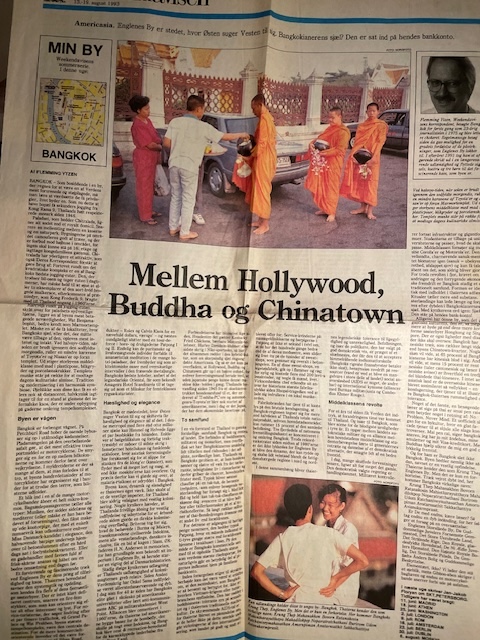
GENUDGIVELSE. Denne artikel blev publiceret i Weekendavisen 13. august 1993 og er således fra den periode (1991-94) jeg var bosiddende i Thailands hovedstad.
Americasia. Englenes By er stedet, hvor Østen suger Vesten til sig. Bangkokianerens sjæl? Den er sat ind på hendes bankkonto.
BANGKOK – Som bosiddende i en by, der regnes for at være en af Verdens mest forurenede og støjplagede, må man lære at værdsætte de få privilegier, livet byder en. Som nu dette at have bopæl få sekunders jogging fra Kong Rama 9, Thailands højt respekterede monark siden 1946.
Paladset, som hedder Chitralada, ligner alt andet end et royalt domicil. Snarere en mellemting mellem en kaserne og en naturpark. Bygningerne på området camoufleres godt af træer, og der er forbud mod højhuse i området, for ingen skal kunne stå på 16. etage og iagttage kongefamiliens gøremål.
Chitralada har yderligere et attraktiv, som også Deres Korrespondent forstår at gøre brug af: Fortovet rundt om det kvadratiske kompleks er en af Bangkoks bedste jogging-ruter. Den, der trodser osen fra bilerne og tager ruten i dagtimerne, har måske held til at øjne et eller to eksemplarer af den sort-hvid brogede malkerace, efterkommere af præmiedyr, som Kong Frederik 9. bragte med til Thailand engang i 1960’erne.
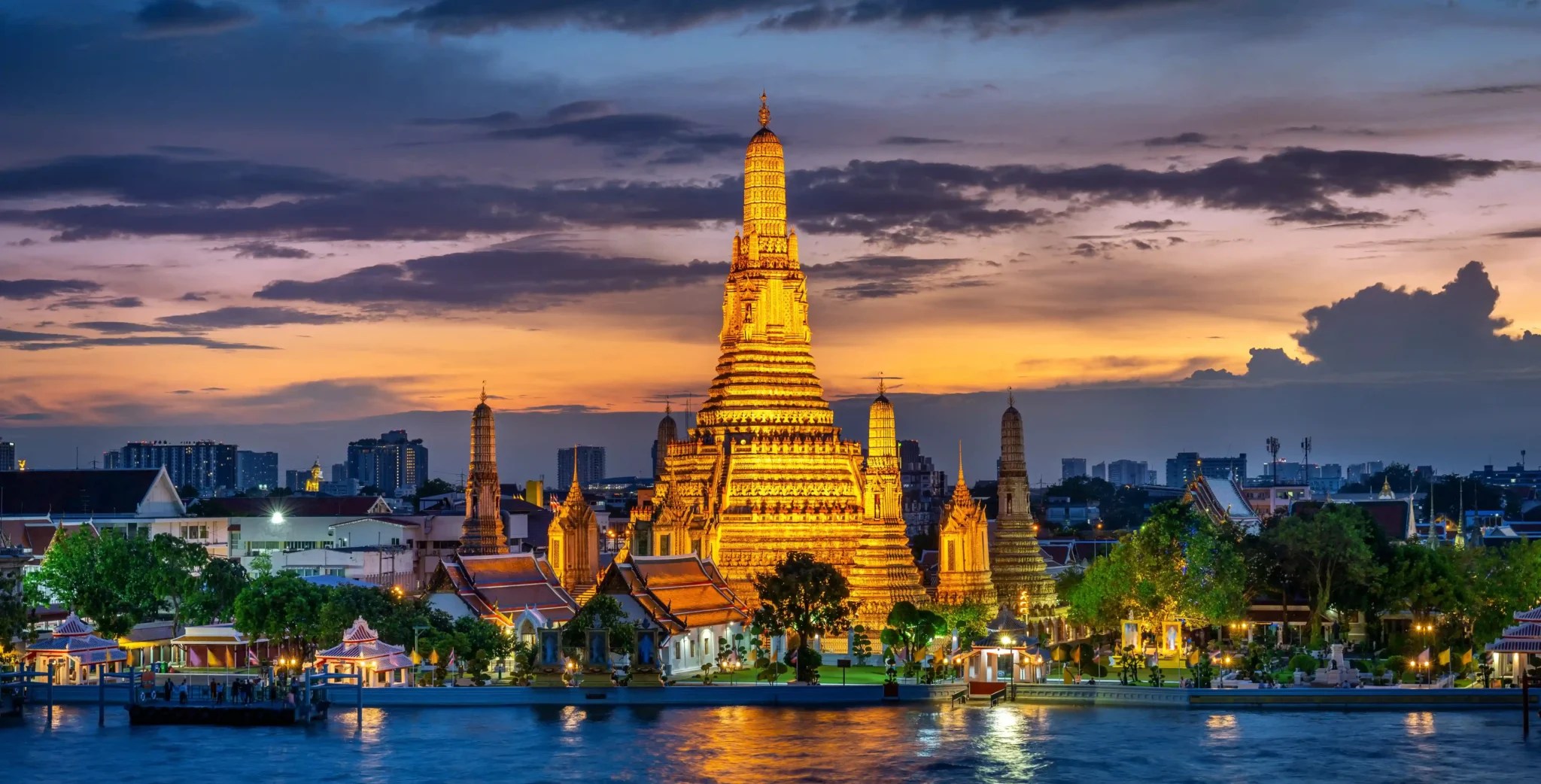
Halvvejs rundt på jogging-ruten, skråt over for paladsets sydvestlige hjørne, ligger en af byens mest betagende seværdigheder, Wat Benjamabophit, bedre kendt som Marmortemplet. Måske en af de få lokaliteter, hvor Bangkoks sjæl, eller det, der måtte være tilbage af den, opleves mest intenst og intakt.
Ved halvsyvtiden, når solen er brudt igennem den sodfyldte morgendis, ruller en mindre karavane af Toyota’er og Nissan’er op foran templet. Ud stiger storbyens middelklasse med mad i plasticpose, blikgryder og porcelænskrukker. Templets munke står på række for at modtage dagens kulinariske almisse. Tradition og modernisering i en harmonisk symbiose. Øjeblikke som disse kan få en ellers nok så distanceret, halvkynisk iagttager til for en stund at glemme det infernalske kaos, der er under opbygning på gaderne omkring tempelkomplekset.
Byen er vågen Bangkok er for længst vågnet. På Petchburi Road hober de osende bybusser sig op i utålmodige kødannelser. Pladsmanglen på den overbelastede asfalt gør, at det mest effektive transportmiddel er motorcyklerne. De smyger sig en for en op mellem bilkolonnerne og kommer derfor først over vejkrydsene.
I myldretiderne er der så mange af dem, at man forledes til at tro, at byens hundredtusinder af motorcyklister har organiseret sig i bander for at trodse den terror, som bilisterne udfolder.
Et blik ind i en af de mange motorcykelbander åbner et helt mikro-kosmos. Bagsædepassagererne tæller alle typer: Munken, der sidder sidelæns og mediterer (eller måske er han bare bedøvet af forureningen), den fikst makeup’ede kontorpige, der med et enkelt numsevrik kan udkonkurrere enhver Miss Danmark-kandidat i elegance, den halvsovende barpige undervejs hjemover til betonslummen efter en hård dags nat i forlystelseskvarteret. Eller en gadehandler med favnen fuld af frisk-skårne ananas og håbet om en bedre omsætning end dagen før.
Et forvirrende og fascinerende træk ved Englenes By er dens præg af tilfældighed og kaos. Thaiernes hovedstad savner den systematik og opdeling, som kendes fra flere af dens fjernøstlige søsterbyer. Der er intet klart defineret centrum, snarere en fire-fem stykker, som man kan orientere sig efter alt efter interesser og lyst. For novice-turisterne, der søger lindring efter et par timers trafikchok, vil Grand Palace og Wat Prakheo, byens største tempelkompleks, være den centrale destination.
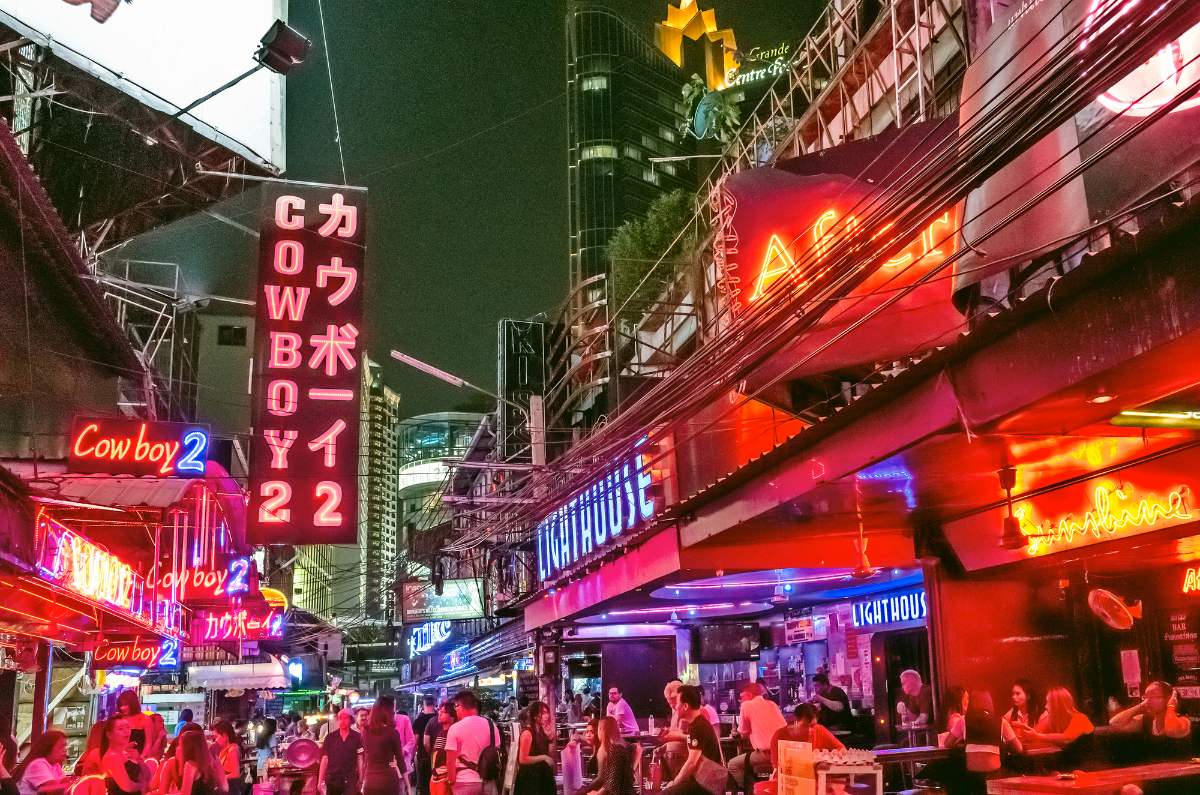
For de mere kommercielt orienterede hoveder vil det være forretningskvarteret op til Silom Road, der bugner med de velkendte kopi-produkter – Rolex og Calvin Klein for en nævefuld dollars, værsgo’ – og næsten uundgåeligt slutter med en tour-de-force i hore- og drukgaderne Patpong I og II.
Endelig kan de puritanske og livsfornægtende individer forfalde til amatøristisk meditation i de mange hotel-paladser, der frembyder sig som arkitektoniske oaser med overskuelige intervaller i den fræsende metaljungle. Bangkoks bedste hoteller, anført af det legandariske Oriental, får som bekendt Amagers Hotel Scandinavia til at tage sig ud som et blikskur for femteklasses rygsæksturister.
Hæslighed og elegance Bangkok er mødestedet, hvor Østen suger Vesten til sig og skiftevis får hæslighed og elegance ud af det. I denne metropol med flere end otte millioner sjæle kan Himmel og Helvede ligge et par husblokke fra hinanden. Enklaver af bølgeblik-slum og fortidig teaktræsidyl er naboer til sidste skrig i femstjernet hotelluksus og funklende stålsiloer, hvor asiatisk forretningsliv har forskanset sig for at slippe for stanken fra de klongs (kanaler), som flyder med så meget lort og møg, at end ikke moskito’erne kan overleve.
Præcis derfor kan vi glæde sig over, at malaria-risikoen er udryddet i Bangkok. Byens kaos, dynamik og elendighed er thaiernes eget værk. Ikke skabt af et de vestlige imperier, for Thailand blev aldrig velsignet med vestlig kolonisering. Nogle kynikere hævder, at Thailands frivillige åbning for vestlig indflydelse og udnyttelse for et århundrede siden gjorde en direkte kolonisering overflødig. Briterne tog for sig, hvad de behøvede i Burma og Malaya, franskmændene civiliserede Indokina, mens alle vesterlændinge, danskere inclusive, fik en bid af kagen i Siam. ØK-faderen H.N. Andersen in memoriam, for han grundlagde som bekendt sit imperium i Englenes By, så herude starter en vigtig del af Danmarkshistorien.
Stadig ifølge kynikernes udlægning er Thailands uafhængighed af kolonimagternes greb relativ. Siden Anden Verdenskrig har Onkel Sams indflydelse været allersteds nærværende og dyb. I dag som for 40 år siden har Bangkoks elite gået i skolesko på amerikanske universiteter eller lært anti- kommunismens ABC på militærakademiet West Point.
Alliancen blev cementeret i 1960’erne, da thaierne lod amerikanerne bygge baser for de bombefly, der skulle på togt over Indokina, og Bangkok blev rest &recreation-hovedstad for de karseklippede læderhalse fra Guds Eget Land. Forbindelserne har blomstret lige siden.
Hvad enten det gælder Kentucky Fried Chickens, bærbare Motorola-telefoner, Harley Davidson-klubber eller sidste skrig i Nike-sportssko, så har det altsammen rødder i den hybrid-kultur, som en skarpsindig sjæl engang døbte Americasia. Så er det kun på overfladen, at Hollywood, Buddha og Chinatown går op i en højere enhed, for enhver forretningsmand herude ved, at uden japanske penge kunne denne maskine ikke holdes i gang. Thailands forvandling siden 1945 fra et oksekærre-trukket bondesamfund til et, der er drevet af Toshiba-PC’ere og Toyota’er blev nok startet af amerikanerne, men i dag er det Japan, der har den økonomiske førertrøje på.
To samfund I en vis forstand er Thailand to ganske forskellige samfund: Bangkok og resten af landet. De forbindes af buddhismen, militæret og monarkiet, men overfladisk set har Bangkokianeren umådelig lidt tilfælles med risbonden i det udpinte, nordøstlige Isan. Thailands og Bangkoks problem er, at Isan-bondens sønner og døtre vil væk fra det tørkeramte, udsigtsløse liv i rismarkerne og derfor griber de chancer, hovedstaden frister med.
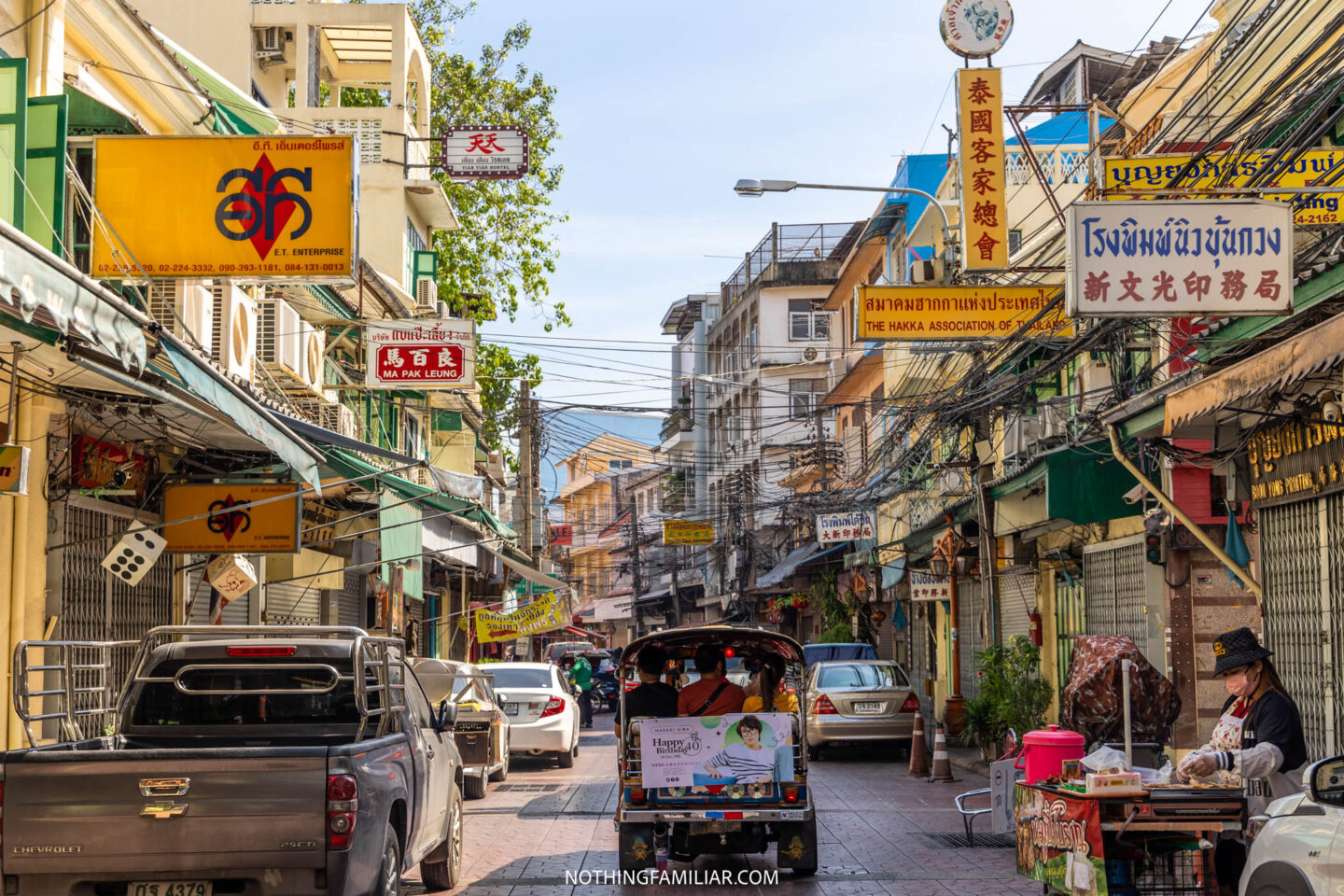
Typisk bliver sønnen chauffør på en tuk-tuk, de berømte trehjulere, som enhver besøgende vesterlænding har forsøgt sig i. Med lidt flid og held kan tuk-tuk- chaufføren en skønne dag avancere til at blive bellboy eller tallerkenvasker på et af turisthotellerne. Så langt rækker millioner af thai-bondedrenges drømme om et andet liv end forældrenes. For døtrene er adgangen til hurtige penge nemmere, den hedder typisk Patpong, hvor en måneds indkomst er ti-tyve gange større end forældrenes hjemme i teakhuset i Isan. På den måde er Bangkoks kommercielle sex med til at opholde Thailands status som verdens største riseksportør, for naturligvis går en betydelig del af pigernes indkomst hjem på familiens bankkonto.
Inden forargelsen stiger til skyskraberhøjde kan det være værd at erindre om, at den sexindustri, som Bangkok er så berømt og berygtet for, ikke er hverken Vietnam-krigens eller turistbranchens opfindelse. Den har rødder i buddhismens tolerante syn på sexualitet og i thaiernes traditionelle machokultur. De skræmmende AIDS-tal er for thaierne blevet en påmindelse om, at de heller ikke på dette område undgår virkningerne af den internationalisering, som landet på godt og ondt er blevet offer for.
Service-kvinderne på massageklinikkerne og barpigerne i Patpong er ikke et sekund i tvivl om, at de har det hundrede gange bedre end de af deres medsøstre, som slider sig livet itu på de tusinder af sweatshops, som gemmer sig overalt i betonjungelen. En af disse sweatshops, en legetøjsfabrik, gik op i flammer og røg for nylig og kostede flere end 200 lavtlønskvinder, og nogle få mænd, livet.
Virksomhedens chef erkendte sit ansvar for historiens største fabriksulykke siden Bhopal-tragedien ved at lade sig indrullere i en lokal munkeorden. Fabriksbranden har tjent til at kaste lys på den brutale kendsgerning, at Bangkok-regionen tegner sig for mere end halvdelen af Thailands totale nationalprodukt, selvom hovedstadsområdet kun rummer 15 procent af den samlede befolkning. Tre fjerdedele af nationens fremstillingsindustri er koncentreret i og omkring Bangkok. Trods rekordvækstrater siden midten af 1980’erne er det ikke lykkedes for Englenes By at blive den dynamo, der kan rydde op og skabe lidt velstand blandt de fattigdomshærgede regioner i nord og nordøst. I denne sammenhæng bliver thaiernes legendariske tolerance til ligegyldighed og uansvarlighed.
Middelklassens revolte For et års tid siden (1992, F.Y.) fik Verden det indtryk, at forandringens time var kommet til Thailand. Især til Bangkok, som blev scene for de blodigste uroligheder i tyve år. Et opgør mellem landets autokratiske militær og en alliance mellem hovedstadens middelklasse og studenterbevægelse førte til generalernes retræte og dannelse af et demokratisk alternativ, der smagte lidt af en bedre fremtid. I dag, mange skuffede forventninger senere, ligner alt for meget det gamle. Den demokratisk valgte regering er handlingslammet. Militæret kontrollerer fortsat infrastruktur og gigantformuer. Studenterne er tilbage på universiteterne og passer, hvad de skal passe. Middelklassen fornøjer sig med sine Corolla’er og Motorola’er. Den velkendte, charmerende sanuk-mentalitet blomstrer igen (sanuk = ubekymrethed, afslappet sjov) og kun få taler åbent om det, som aldrig bliver gjort.
For trods revolten i fjor, kravet om forandringer og den forrygende økonomiske fremdrift er Bangkok stadig et dybt traditionelt samfund. Formen er identisk med indholdet i thaiernes adfærd. Ritualer tæller mere end substans. Vesterlændinge kan lede længe og forgæves efter dybden i bangkokianernes sjæl. Med kynikerens ord igen: Sjæl? Den står på hendes bankkonto! Alligevel har denne by, som det gigantiske kulturmix, den er, så meget mere at byde på end dens mere konforme søsterbyer Hongkong og Singapore. Der er også ligheder med disse, der ikke skal overses: Bangkok har kinesiske træk, som rækker langt videre end byens Chinatown-kvarter.
Nogle skøn vil vide, at 65 procent af bangkokianerne har kinesisk blod i sig. Andre vil vide, at mens 15 procent er rent kinesiske (taler cantonesisk og læser kinesiske aviser) er i hvert fald en tredjedel blandede thai-kinesere. I intet andet asiatisk land er de oversøiske kinesere blevet assimileret så vellykket – en kendsgerning, der tjener til at illustrere Bangkok-thaiernes rummelighed og tolerance.
Noget af det første, en besøgende lærer at sige på thai er »mai pen rai«, som betyder noget i retning af: No Problem. Never Mind. Et uofficielt slogan for en bykultur, hvor en glat facade tjener til at skjule alle slags kontroverser. Mai pen rai, siger bangkokianeren, jeg har jo mit åndehus, mine amuletter og mit Visa-kreditkort. Med Buddhas hjælp sikrer de mig en god og lykkelig fremtid. Og for ham er Bangkok slet ikke Bangkok. Byen hedder nemlig ikke sådan, navnet er en vestlig opfindelse. Thaierne kender den som Krung Thep, Englenes By. Men det er kun en forkortelse.
Er De med endnu, kære læser? Så tag endnu en dyb indånding, for her følger et forsøg på en oversættelse: Englenes Storslåede By, De Guddommelige Juvelers Fornemste Gemmested, Det Store Uerobrede Land, Det Strålende Rige, Den Royale, glædesfyldte Hovedstad, De Ni Ædle Juvelers Hjemsted, Den Højeste Royale Bolig, Det Storslåede Palads, De Genfødte Ånders Bolig og Guddommelige Beskyttelse.
Elementært, ikke? Vi lader den stå et øjeblik, mens Gibbonaben skriger i baghaven og endnu en motorcykelbande snerrer forbi ude på asfalten.
Flemming Ytzen, Weekendavisens korrespondent, besøgte Bangkok for første gang som 23-årig journalistelev i 1975 og blev lettere chokeret. Regelmæssige besøg siden da gav mulighed for en gradvis fordøjelse af de påvirkninger, som Englenes By lokker til. I efteråret 1991 tog han et afgørende skridt ud i en længerevarende udlændighed og flyttede sig selv, hustru og tre børn til det fascinerende kaos, som byen er.
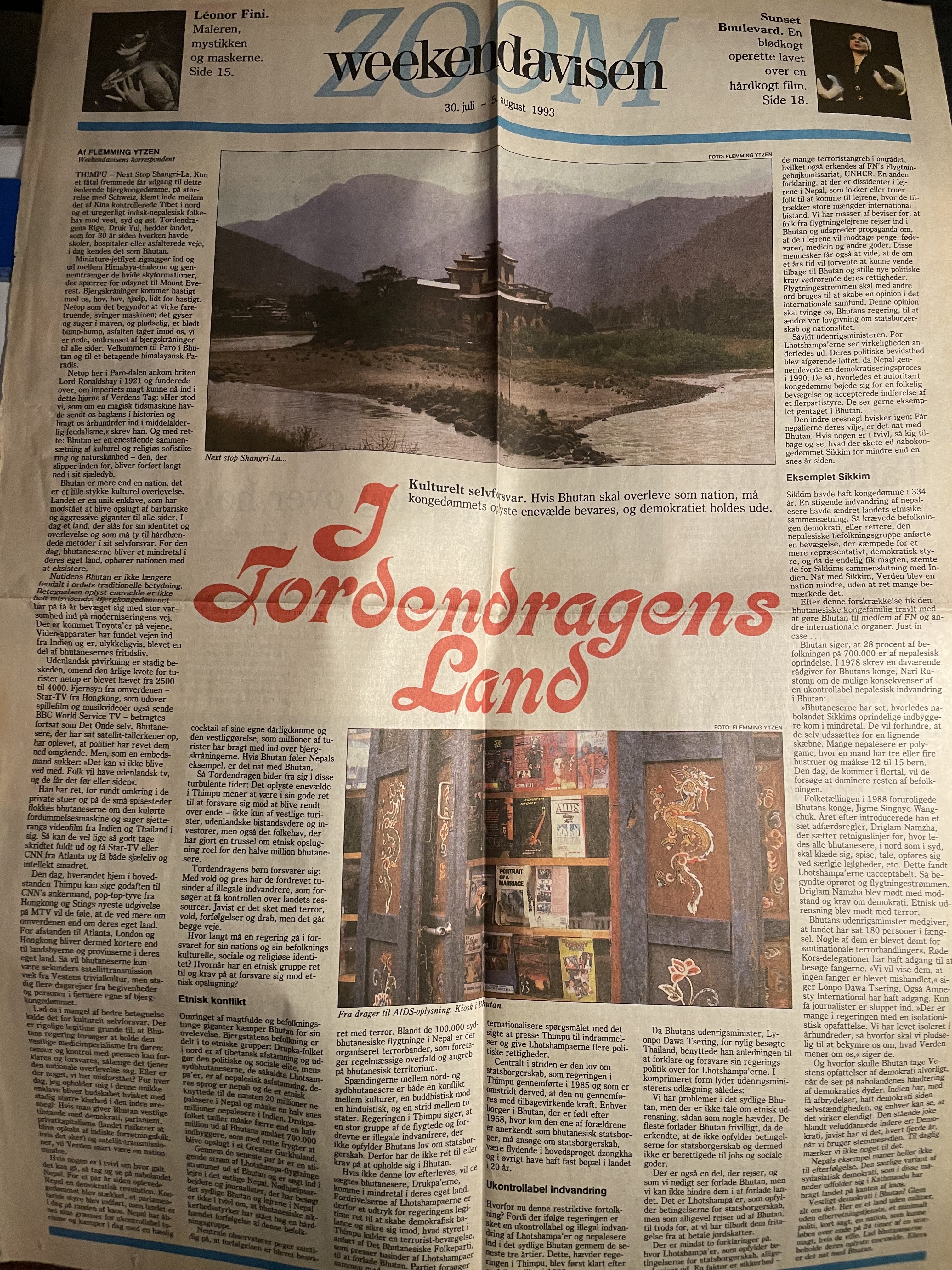
I foråret 1993 besøgte jeg Nepal og Bhutan som udviklingskonsulent. Weekendavisen publicerede 30. juli samme år min reportage fra Bhutan, som dengang kun havde et ganske beskedent samkvem med omverdenen. Siden da er Bhutan blevet et meget eftertragtet om end dyrt rejsemål.
I Tordendragens land. Hvis Bhutan skal overleve som nation, må kongedømmets oplyste enevælde bevares, og demokratiet holdes ude.
THIMPU – Next Stop Shangri-La. Kun et fåtal fremmede får adgang til dette isolerede bjergkongedømme, på størrelse med Schweiz, klemt inde mellem det af Kina kontrollerede Tibet i nord og et uregerligt indisk-nepalesisk folkehav mod vest, syd og øst. Tordendragens Rige, Druk Yul, hedder landet, som for 30 år siden hverken havde skoler, hospitaler eller asfalterede veje, i dag kendes det som Bhutan.
Miniature-jetflyet zigzagger ind og ud mellem Himalaya-tinderne og gennemtrænger de hvide skyformationer, der spærrer for udsynet til Mount Everest. Bjergskråninger kommer hastigt mod os, hov, hov, hjælp, lidt for hastigt. Netop som det begynder at virke faretruende, svinger maskinen; det gyser og suger i maven, og pludselig, et blødt bump-bump, asfalten tager imod os, vi er nede, omkranset af bjergskråninger til alle sider.
Velkommen til Paro i Bhutan og til et betagende himalayansk Paradis.
Netop her i Paro-dalen ankom briten Lord Ronaldshay i 1921 og funderede over, om imperiets magt kunne nå ind i dette hjørne af Verdens Tag: »Her stod vi, som om en magisk tidsmaskine havde sendt os baglæns i historien og bragt os århundrder ind i middelalderlig feudalisme,« skrev han. Og med rette: Bhutan er en enestående sammensætning af kulturel og religiøs sofistikering og naturskønhed – den, der slipper inden for, bliver forført langt ned i sit sjæledyb.
Bhutan er mere end en nation, det er et lille stykke kulturel overlevelse. Landet er en unik enklave, som har modstået at blive opslugt af barbariske og aggressive giganter til alle sider. I dag et land, der slås for sin identitet og overlevelse og som må ty til hårdhændede metoder i sit selvforsvar. For den dag, bhutaneserne bliver et mindretal i deres eget land, ophører nationen med at eksistere.
Nutidens Bhutan er ikke længere feudalt i ordets traditionelle betydning. Betegnelsen oplyst enevælde er ikke helt misvisende. Bjergkongedømmet har på få år bevæget sig med stor varsomhed ind på moderniseringens vej. Der er kommet Toyota’er på vejene. Video-apparater har fundet vejen ind fra Indien og er, ulykkeligvis, blevet en del af bhutanesernes fritidsliv. Udenlandsk påvirkning er stadig beskeden, omend den årlige kvote for turister netop er blevet hævet fra 2500 til 4000. Fjernsyn fra omverdenen – Star-TV fra Hongkong, som udover spillefilm og musikvideoer også sende BBC World Service TV – betragtes fortsat som Det Onde selv. Bhutanesere, der har sat satellit-tallerkener op, har oplevet, at politiet har revet dem ned omgående. Men, som en embedsmand sukker: »Det kan vi ikke blive ved med. Folk vil have udenlandsk tv, og de får det før eller siden«.
Han har ret, for rundt omkring i de private stuer og på de små spisesteder flokkes bhutaneserne om den kulørte fordummelsesmaskine og suger sjetterangs videofilm fra Indien og Thailand i sig. Så kan de vel lige så godt tage skridtet fuldt ud og få Star-TV eller CNN fra Atlanta og få både sjæleliv og intellekt smadret.
Den dag, hverandet hjem i hovedstanden Thimpu kan sige godaften til CNN’s ankermand, pop-top-tyve fra Hongkong og Stings nyeste udgivelse på MTV vil de føle, at de ved mere om omverdenen end om deres eget land. For afstanden til Atlanta, London og Hongkong bliver dermed kortere end til landsbyerne og provinserne i deres eget land. Så vil bhutaneserne kun være sekunders satellittransmission væk fra Vestens trivialkultur, men stadig flere dagsrejser fra begivenheder og personer i fjernere egne af bjergkongedømmet. Lad os i mangel af bedre betegnelse kalde det for kulturelt selvforsvar.
Der er rigelige legitime grunde til, at Bhutans regering forsøger at holde den vestlige medieimperialisme fra døren: censur og kontrol med pressen kan forklares og forsvares, så længe det tjener den nationale overlevelse sag. Eller er der noget, vi har misforstået? For hver dag, jeg opholder mig i denne unikke enklave bliver budskabet hvisket med stadig større klarhed i den indre øresnegl: Hvis man giver Bhutan vestlige tilstande med demokrati, parlament, privatkapitalisme (landet risikerer at blive opkøbt af indiske forretningsfolk, hvis det sker) og satellit-transmissioner, vil Verden snart være en nation mindre.
Hvis nogen er i tvivl om hvor galt det kan gå, så tag og se på nabolandet Nepal. For et par år siden oplevede Nepal en demokratisk revolution. Kongedømmet blev stækket, et parlamentarisk styre blev indført, men landet er i dag på randen af kaos. Nepal har åbnet sine grænser for ukontrollabel turisme og kæmper i dag med en hæslig cocktail af sine egne dårligdomme og den vestliggørelse, som millioner af turister har bragt med ind over bjergskråningerne.
Hvis Bhutan føler Nepals eksempel, er det nat med Bhutan. Så Tordendragen bider fra sig i disse turbulente tider: Det oplyste enevælde i Thimpu mener at være i sin gode ret til at forsvare sig mod at blive rendt over ende – ikke kun af vestlige turister, udenlandske bistandsydere og investorer, men også det folkehav, der har gjort en trussel om etnisk opslugning reel for den halve million bhutanesere. Tordendragens børn forsvarer sig: Med vold og pres har de fordrevet tusinder af illegale indvandrere, som forsøger at få kontrollen over landets ressourcer. Javist er det sket med terror, vold, forfølgelser og drab, men det går begge veje. Hvor langt må en regering gå i forsvaret for sin nations og sin befolknings kulturelle, sociale og religiøse identitet? Hvornår har en etnisk gruppe ret til og krav på at forsvare sig mod etnisk opslugning?
Etnisk konflikt Omringet af magtfulde og befolkningstunge giganter kæmper Bhutan for sin ovelevelse. Bjergstatens befolkning er delt i to etniske grupper: Drupka- folket i nord er af tibetansk afstamning og udgør den politiske og sociale elite, mens sydbhutaneserne, de såkaldte Lhotsampa’er, er af nepalesisk asfstamning, deres sprog er nepali og de er etnisk knyttede til de næsten 20 millioner nepalesere i Nepal og måske en halv snes millioner nepalesere i Indien.
Drukpa-folket tæller måske færre end en halv million ud af Bhutans anslået 700.000 indbyggere, som med rette frygter at blive opslugt i et Greater Gurkhaland. Gennem de seneste par år er en stigende strøm af Lhotshampa-flygtninge strømmet ud af Bhutan og er søgt ind i lejre i det østlige Nepal. Nødhjælpsarbejdere og journalister, der har besøgt det sydlige Bhutan og lejrene i Nepal er ikke i tvivl om, at bhutanesiske sikkerhedsstyrker har stået bag en hårdhændet forfølgelse af denne befolkningsgruppe.
Neutrale observatører peger samtidig på, at forfølgelsen er blevet besvaret med terror. Blandt de 100.000 syd-bhutanesiske flygtninge i Nepal er der organiseret terrorbander, som foretager regelmæssige overfald og angreb på bhutanesisk territorium. Spændingerne mellem nord- og sydbhutanesere er både en konflikt mellem kulturer, en buddhistisk mod en hinduistisk, og en strid mellem to stater. Regeringen i Thimpu siger, at en stor gruppe af de flygtede og fordrevne er illegale indvandrere, der ikke opfylder Bhutans lov om statsborgerskab. Derfor har de ikke ret til eller krav på at opholde sig i Bhutan.
Hvis ikke denne lov efterleves, vil de »ægte« bhutanesere, Drukpa’erne, komme i mindretal i deres eget land. Fordrivelserne af Lhotshampaerne er derfor et udtryk for regeringens legitime ret til at skabe demokrafisk balance og sikre sig imod, hvad styret i Thimpu kalder en terrorist- bevægelse, anført af Det Bhutanesiske Folkeparti, som presser tusinder af Lhotshampaer til at forlade Bhutan. Partiet forsøger sammen med regeringen i Nepal at internationalisere spørgsmålet med det sigte at presse Thimpu til indrømmelser og give Lhotshampaerne flere politiske rettigheder. Centralt i striden er den lov om statsborgerskab, som regeringen i Thimpu gennemførte i 1985 og som er omstridt derved, at den nu gennemføres med tilbagevirkende kraft. Enhver borger i Bhutan, der er født efter 1958, hvor kun den ene af forældrene er anerkendt som bhutanesisk statsborger, må ansøge om statsborgerskab, være flydende i hovedsproget dzongkha og i øvrigt have haft fast bopæl i landet i 20 år.
Ukontrollabel indvandring Hvorfor nu denne restriktive fortolkning? Fordi der ifølge regeringen er sket en ukontrollabel og illegal indvandring af Lhotshampa’er og nepalesere ind i det sydlige Bhutan gennem de seneste tre årtier. Dette, hævder regeringen i Thimpu, blev først klart efter en folketælling i 1988. Da Bhutans udenrigsminister, Lyonpo Dawa Tsering, for nylig besøgte Thailand, benyttede han anledningen til at forklare og forsvare sin regerings politik over for Lhotshampa’erne.
I komprimeret form lyder udenrigsministerens udlægning således: Vi har problemer i det sydlige Bhutan, men der er ikke tale om etnisk udrensning, sådan som nogle hævder. De fleste forlader Bhutan frivilligt, da de erkendte, at de ikke opfylder betingelserne for statsborgerskab og dermed ikke er berettigede til jobs og sociale goder. Der er også en del, der rejser, og som vi nødigt ser forlade Bhutan, men vi kan ikke hindre dem i at forlade landet.
Det er Lhotshampa’er, som opfylder betingelserne for statsborgerskab, men som alligevel rejser ud af Bhutan, til trods for, at vi har tilbudt dem fritagelse fra at betale jordskatter. Der er mindst to forklaringer på, hvor Lhotshampa’er, som opfylder betingelserne for statsborgerskab, alligevel rejser ud. En faktor er sikkerhed – de mange terroristangreb i området, hvilket også erkendes af FN’s Flygtningehøjkommissariat, UNHCR. En anden forklaring, at der er dissidenter i lejrene i Nepal, som lokker eller truer folk til at komme til lejrene, hvor de tiltrækker store mængder international bistand.
Vi har masser af beviser for, at folk fra flygtningelejrene rejser ind i Bhutan og udspreder propaganda om, at de i lejrene vil modtage penge, fødevarer, medicin og andre goder. Disse mennesker får også at vide, at de om et års tid vil forvente at kunne vende tilbage til Bhutan og stille nye politiske krav vedrørende deres rettigheder. Flygtningestrømmen skal med andre ord bruges til at skabe en opinion i det internationale samfund. Denne opinion skal tvinge os, Bhutans regering, til at ændre vor lovgivning om statsborgerskab og nationalitet. Såvidt udenrigsministeren. For Lhotshampa’erne ser virkeligheden anderledes ud. Deres politiske bevidsthed blev afgørende løftet, da Nepal gennemlevede en demokratiseringsproces i 1990. De så, hvorledes et autoritært kongedømme bøjede sig for en folkelig bevægelse og accepterede indførelse af et flerpartistyre. De ser gerne eksemplet gentaget i Bhutan. Den indre øresnegl hvisker igen: Får nepalierne deres vilje, er det nat med Bhutan. Hvis nogen er i tvivl, så kig tilbage og se, hvad der skete ed nabokongedømmet Sikkim for mindre end en snes år siden.
Eksemplet Sikkim Sikkim havde haft kongedømme i 334 år. En stigende indvandring af nepalesere havde ændret landets etnisike sammensætning. Så krævede befolkningen demokrati, eller rettere, den nepalesiske befolkningsgruppe anførte en bevægelse, der kæmpede for et mere repræsentativt, demokratisk styre, og da de endelig fik magten, stemte de for Sikkims sammenslutning med Indien. Nat med Sikkim, Verden blev en nation mindre, uden at ret mange bemærkede det. Efter denne forskrækkelse fik den bhutanesiske kongefamilie travlt med at gøre Bhutan til medlem af FN og andre internationale organer. Just in case . . . Bhutan siger, at 28 procent af befolkningen på 700.000 er af nepalesisk oprindelse.
I 1978 skrev en daværende rådgiver for Bhutans konge, Nari Rustomji om de mulige konsekvenser af en ukontrollabel nepalesisk indvandring i Bhutan: »Bhutaneserne har set, hvorledes nabolandet Sikkims oprindelige indbyggere kom i mindretal. De vil forhindre, at de selv udsættes for en lignende skæbne. Mange nepalesere er polygame, hvor en mand har tre eller fire hustruer og maåkse 12 til 15 børn. Den dag, de kommer i flertal, vil de forsøge at dominere resten af befolkningen. Folketællingen i 1988 foruroligede Bhutans konge, Jigme Singnye Wangchuk. Året efter introducerede han et sæt adfærdsregler, Driglam Namzha, der sætter retnignslinjer for, hvor ledes alle bhutanesere, i nord som i syd, skal klæde sig, spise, tale, opføres sig ved særlgie lejlgheder, etc.
Dette fandt Lhotshampa’erne uacceptabelt. Så begyndte oprøret og flygtningestrømmen. Driglam Namzha blev mødt med modstand og krav om demokrati. Etnisk udrensning blev mødt med terror. Bhutans udenrigsminister medgiver, at landet har sat 180 personer i fængsel. Nogle af dem er blevet dømt for »antinationale terrorhandlinger«. Røde Kors-delegationer har haft adgang til at besøge fangerne. »Vi vil vise dem, at ingen fanger er blevet mishandlet,« siger Lonpo Dawa Tsering. Også Amnesty International har haft adgang. Kun få journalister er sluppet ind. »Der er mange i regeringen med en isolationistisk opfattelse. Vi har levet isoleret i århundreder, så hvorfor skal vi pludselig til at bekymre os om, hvad Verden mener om os,« siger de.
Og hvorfor skulle Bhutan tage Vestens opfattelser af demokrati alvorligt, når de ser på nabolandenes håndtering af demokratiets dyder. Indien har, med få afbrydelser, haft demokrati siden selvstændigheden, og enhver kan se, at det virker elendigt. Den stående joke blandt veluddannede indere er: Demokrati, javist har vi det, hvert fjerde år, når vi bruger stemmesedlen. Til daglig mærker vi ikke noget til det. Nepals eksempel maner heller ikke til efterfølgelse. Den særlige variant af sydasiatisk demokrati, som i disse måneder udfolder sig i Kathmandu har bragt landet på kanten af kaos. Vestligt demokrati i Bhutan? Glem alt om det. Her er et land uden militær, uden efterretningstjeneste, et minimalt politi, kort sagt, en nation, som kunne løbes over ende på 24 timer af en stormagt, hvis de ville. Lad bhutaneserne beholde deres oplyste enevælde. Ellers er det nat med Bhutan.
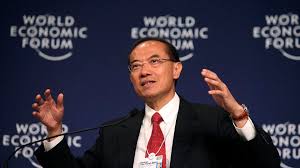
Endnu et bidrag udefra: Hongkong-avisen South China Morning Post har publiceret et interview med et af de mest kyndige individer på den fjernøstlige scene: Singapores tidligere udenrigsminister (2004-2011) George Yeo. Den tekst rummer så megen indsigt at jeg bringer den her. God læselyst!
George Yeo on superpower ‘headaches’
South China Morning Post
December 21, 2025
George Yeo is a visiting scholar at theNational University of Singapore’s Lee Kuan Yew School of Public Policy.
He started his career in the military before entering politics in 1988. During his 23 years with the Singaporean government, Yeo held ministerial portfolios ranging from arts to health, trade and – for seven years – foreign affairs.
After he left politics, Yeo was vice-chairman of Kerry Group in Hong Kong from 2012 to 2021 and chairman and executive director of its logistics arm from 2012 to 2019.
First to Taiwan, which you’ve described as a ticking time bomb. How can it be defused, and how likely is a military conflict across the Taiwan Strait?
We don’t have crystal balls. Politics develops often in unexpected ways. In our minds, we have to think of scenarios. Now imagine the day when, for lack of money, the US has to leave the western Pacific because voters choose butter over guns. That’s one possible scenario. Then unification will happen naturally because I don’t see Taiwanese dying for an independent Taiwan.
Taiwan is separate only because the US is there. The Taiwan issue is a subset of US-China relations. Right now [US President Donald] Trump doesn’t want Taiwan to be an issue because he’s got a big agenda with China. That’s why he did not allow [Taiwanese leader William] Lai Ching-te to make a stopover in the US. It caused Lai to cancel his trip to Paraguay.
And when [Chinese President Xi Jinping and Trump] met in Busan recently, they did not even talk about Taiwan. That was a strong signal to the Taiwanese that the US doesn’t want Taiwan to spoil their negotiations with China. For China, Taiwan is not for negotiation.
Taiwan as part of “one China” is the basis of US-China relations. The US understands this. Whether or not there is trouble over Taiwan depends on the US. China has drawn a very clear red line. The US knows that if it wants trouble with China, it can move towards and cross the red line. If it doesn’t want trouble with China, it moves away from it.
Of course, the US will never say that it won’t intervene militarily if China uses force to take back Taiwan.
China’s overwhelming preference is peaceful reunification for which it cannot abjure the use of force. How Taiwanese politics develops in response to these dynamics, we’ll have to wait and see. There is growing realisation that the road to independence is a dead end.
A US-China war over Taiwan is highly unlikely in the short term. In another five years, the change in the relative strength between the US and China will make it harder for the US to prevent or delay China’s reunification.
This is already affecting the way people think in Taiwan, including younger Taiwanese. If the young people of Taiwan build their hopes on an illusion – as the young people in Hong Kong once did – it will only lead to tragedy.
Therefore negotiating earlier with Beijing is better than negotiating later, which was [Singapore’s first prime minister] Lee Kuan Yew‘s point many years ago. Taiwan can enjoy more autonomy by negotiating now rather than waiting another 10 years.
Taiwan has its own strengths and can contribute much to China’s long-term development. My favourite two examples are [semiconductor firm] TSMC and [humanitarian organisation] the Tzu Chi Foundation, which are unique to Taiwan and cannot be easily replicated on the mainland.
Taiwanese leaders should think deeply about what Taiwanese people need to maintain a high degree of autonomy. Only with a high degree of autonomy can Taiwan be different and therefore able to enhance China as a whole. A full integration of Taiwan to the mainland is of much lesser use to the mainland and the world.
What’s your take on the latest row between Beijing and Tokyo over Taiwan?
I put this possibly to Sanae Takaichi‘s newness to her position as prime minister. She might not have realised the gravity of her remarks. She is now stuck – retracting those remarks is a loss of face.
Or, it may be that she made her remarks deliberately, in order to provoke a strong reaction from China and use that to win popularity and justify higher defence spending, thinking that the US will back her.
But Trump wants stable relations with China for the rest of his term and doesn’t need this additional problem with China. After speaking to Xi Jinping, he has asked Takaichi to lower the temperature. China will not make it too easy for her because it has to deter similar actions in the future, not only by Japanese leaders but also by the leaders of other countries.
I think the Chinese will now reopen the Ryukyu issue – not officially, but through social media and other unofficial channels. Ryukyu as part of Japan was never part of the deal among the victorious powers at the end of the second world war. There was only agreement for Japan to retain the four main islands.
At that time Chiang Kai-shek, and later Mao Zedong, decided not to make Ryukyu an issue. China could have but did not. It is not wise for Takaichi to give China this opening by tying Taiwan’s security to Japan’s.
The depth of Chinese emotion over Taiwan should not be underestimated. [Henry] Kissinger wrote about it repeatedly – how in his negotiations with Zhou Enlai and Mao, they kept going back to Taiwan and one China.
How can they ever forget that it was Japan’s aggression which separated Taiwan from the mainland in the first place?
Raising Ryukyu as an issue will deter Japanese politicians from being adventurous on Taiwan. I don’t think China wants to escalate but they want Takaichi to climb down.
Some loss of face for her is inevitable but it won’t be too much because, in the end, China does want good relations with Japan. And that is also in Japan’s interest.
How do you see US-China relations over the rest of Trump’s term?
Relations are stabilising but there will still be occasional turbulence. China was forced to play the rare earths card, which it did not want to for a long time. Once you play a card it begins to lose its value.
This card has been on the poker table since the Deng Xiaoping era in 1992. China expected the US to know it had this card. But the US ignored it, thinking that it could pressure China without China hitting back.
The US has no response to the rare earths card in the short term. Trump’s signing of new agreements on rare earths with other countries will reduce US dependence on China for the lighter rare earths after maybe five, eight years.
But for the heavy rare earths, China has a chokehold for which there is simply no way out for the US. Only China and Myanmar have heavy rare earths. Myanmar’s mines are near China and not accessible to the US.
This is not unlike the Tang monk putting a gold band around the head of Sun Wukong, the Monkey King, in the historical novel Journey to the West. Whenever Wukong became difficult, the monk’s mantra would tighten the headband. Wukong became the hero. It was Wukong who helped the monk bring sutras back to China.
In a sense, the US and China have put gold bands on each other’s heads – each can inflict severe headaches on the other.
The US has been systematically preventing critical technology flow to China. While the US can deny China Boeing jetliners, Pratt & Whitney and GE engines, engine spare parts, there is no certainty the Europeans will follow with an embargo on Airbus aeroplanes and Rolls-Royce engines.
This is China’s current vulnerability which it is working hard to overcome. Its fast-rail network will ensure that internal movement can still carry on.
On the other side, China’s denial of rare earths will bring down entire industries in the US and Europe. In such an extreme scenario, the world economy will plunge into depression.
What we now have is a situation of mutual deterrence, with each having a lock on the other. So long as rational minds are in charge, there will not be a blow-up. Unfortunately, leaders sometimes act irrationally.
Do you think the trade truce will last for a while at least?
A truce is likely for the rest of the Trump term. Trump certainly needs it for the midterms because if the economy takes a turn for the worse, his chances of keeping Republican control of both houses in Congress will diminish.
He doesn’t want to be a lame duck. He can issue executive orders but the Supreme Court may curtail him because of the constitutional separation of powers.
Trump therefore needs stable relations with China. He now talks about everlasting friendship between the US and China and asks God to bless both countries. God will certainly do so, but we must also pray.
You mentioned that Trump didn’t raise Taiwan when he met Xi. Is Trump putting Taiwan aside in the hope nothing major will happen?
Trump is transactional by nature. He has no strong feelings about Taiwan. I’m not sure how much he knows about Taiwanese society or cross-strait relations. When he first became president, he took a phone call from [then-Taiwanese leader] Tsai Ing-wen. He did not take advice, a little like the new Japanese premier. When asked, after backtracking, why he took the call from Tsai, he explained that Taiwan was an important customer. Taiwan is still an important customer for US weapons.
So should we expect arms sales to Taiwan to continue?
Yes, but it will be calibrated. It’s always been calibrated, and confined mainly to defensive equipment.Of course what is defensive and offensive can be unclear but the US will not go too far. They will certainly not supply advanced equipment to Taiwan.
Knowing that many Taiwanese are blue, the US cannot be sure that advanced technology supplied to Taiwan will not quickly leak into China. The military technology supplied to Taiwan is technology the US can afford to lose to China.
America is withdrawing from many areas on the global stage. Do you think the US is in decline?
US decline is a possibility about which Americans themselves worry. If you are a company, country or wealthy family, this is one of the scenarios that you’ve got to allow for. If the US does decline and the US dollar cracks, what do I do? How am I positioned? That’s one scenario.
Another scenario is the US succeeds in healing and revitalising itself. The US overcame a terrible civil war in the 1860s and emerged to become the world’s greatest country.
The Vietnam war period was wrenching, with campuses in turmoil all over the country, yet it recovered and was victorious at the end of the Cold War. Very few Asians believed that a black man could become an American president. [Barack] Obama served two terms.
US decline is something to worry about. US recovery after a period of intense internal struggle is also not to be dismissed. It has institutions which remain vital and incomparable.
So it is a possible scenario, but it’s not happening yet?
The US is in decline now. That’s why Americans talk about making the country great again. The question is: can it recover? No one knows. American society is deeply divided. Those on opposite sides view each other as enemies. From afar, it may look hopeless but those of us who studied or lived in America know that the country has deep strengths to draw on.
Even Americans themselves are not sure. At my recent 40th class reunion at the Harvard Business School, two old section mates asked me privately whether I thought the US was in decline. I was taken aback by the introspection.
No one has a crystal ball. Neither can we envisage all scenarios. History is full of surprises.
You just mentioned the possibility that the dollar might crack.
How could the position of the US dollar be sustained with the way the deficit is growing?
The hope of course is that the US can grow out of its debt. However, the reality is that if you have difficulty even servicing the debt, let alone repaying the original amount, one day you will have no choice but to monetise that debt. It is therefore wise not to hold too much of one’s assets in US dollars.
Elon Musk was going to put the finances right but failed miserably. When you look at the rising price of gold, it’s a sign of growing concern about the fiscal situation in the US.
The cookie is likely to crumble one day, but no one can be sure when or how.
Governments are doing the same? Are Association of Southeast Asian Nations members also shifting?
Central banks all over the world are building up their gold stocks. No prudent person or government can afford not to worry.
So apart from gold, are there alternatives for reserve currencies for countries?
Everyone has to diversify, and you can diversify in different ways. One is your currency portfolio, but it’s also your financial asset portfolio. It’s also your total asset portfolio and how you deploy your family. Even the languages you want your children or grandchildren to learn, and where you want them educated, are an indication of the future you anticipate.
It’s a big question. That’s why there are so many financial seminars and so many “experts” proffering advice to all and sundry.
There’s no easy answer. Some think that US Treasuries-backed stablecoins are a way to buy time for the US. It is too early to say.
Is there a higher chance for the success of a Brics currency when countries are looking for alternative reserve currencies?
No, I don’t see a Brics currency coming about. For a Brics currency to come about, the renminbi will have to be internationalised. China is only prepared to internationalise the renminbi that is circulating outside China, which is relatively small compared to the renminbi circulating inside China. China will never open its capital market fully because it does not want to lose control of its financial system to New York and London. Capital controls are an important China wall. Brics will, however, accelerate the growth of a payment and settlement system outside US control.
US weaponization of the financial system has engendered much resentment. Russia needs an alternative to Swift. China, India, Brazil and others want an alternative – not to replace the existing system but as a deterrent against egregious US behaviour.
China cannot forget its loss of control after the second opium war, when ships calling on ports along the coast and up the Yangtze were inspected by Westerners – mostly British. They collected tariffs, took what they considered their due, and handed over the rest to the Qing government. Once you lose control of the financial system, you lose the ability to govern.
To Venezuela, Trump has been exerting pressure on the South American nation. Is oil and gas the main consideration?
There’s no doubt that this is a key consideration for Trump. There are other considerations like the Cuban thorn in America’s side and Venezuela‘s antagonism towards Israel.
Trump recognises that the US is overextended. He wants US allies to pay for the protection the US provides them.
His wish is for the US to consolidate around its own hemisphere, not the entire Western hemisphere, because there’s Brazil which is its own pole, but certainly North and Central America and maybe also the northern part of South America. That’s one reason why he wants regime change in Venezuela.
Changing the name of the Gulf of Mexico to the Gulf of America reflects this new world view. That’s also why he wants Canada, Greenland and the Panama Canal. Such a US-dominant sphere will be formidable, with access to three oceans and control over vast resources. The National Security Strategy paper recently issued under Trump’s name envisages such a future.
So Trump wants to consolidate his own sphere and turn it into a polity?
He recognises that the US cannot dominate the world the way it used to in the past. The US hasn’t got the financial power or the manufacturing capability. So it has to retreat some and consolidate around its own core and concentrate on healing itself.
Of course, it doesn’t mean the US will give up on the rest of the world. They will still keep their relations with Europe. They will want to keep China contained. And they will still have capabilities in the western Pacific and the Indian Ocean for a long time. But it has to act with greater economy which means often not acting directly but acting to tip local balances in its favour. In this way, it can achieve more with less effort.
Trump recognises the reality of a multipolar world. The US is primus inter pares in such a world. By moving closer to all other poles, as Kissinger recommended, it will remain influential for a long time.
What does the emerging multipolar world order mean for smaller countries – especially those in Asean?
The US has some 800 military bases around the world, which is an aberration in human history. Sooner or later, the number will be reduced. As Pax Americana recedes, regional equilibriums will be affected. Local hegemons will emerge and many regions will be destabilised.
This is what happens whenever empires retreat. The fall of western Rome was accompanied by barbarian invasions. Europe plunged into the Dark Ages. The effects of the fall of the Ottoman Empire are still being felt all over the Middle East today. The decline of the Qing dynasty was a great drama leading to the establishment of the People’s Republic, and also the establishment of modern Singapore and Hong Kong.
In Asean, we have to protect ourselves. No matter how the configuration of major powers changes, if we stick together and stay neutral, giving each major power a vital interest in our integrity, then our life chances are good.
We don’t see China invading Southeast Asia. Sometimes I feel the Chinese think us rather troublesome. Our land borders with China have been delimited. There are tensions in the South China Sea because of overlapping maritime claims, but they are manageable. We certainly don’t want to get involved in Taiwan.
China is already our biggest trading partner. Every country in Southeast Asia expects China’s role to grow in the future. The collective will to strengthen Asean arises not from love of one another but out of a realistic assessment that we either hang together or we hang separately. Border conflicts like the one between Cambodia and Thailand will not get out of hand. Myanmar is at best a confederation and will neither be too good nor too bad.
We are in a good part of the world and should continue to grow. We want the US presence in Southeast Asia to remain but we are mentally prepared for it to be reduced in the future. If the US forces us to choose, the response may not be what it wishes.
Many people say the risks of military conflict in the South China Sea are high. What’s your view on that?
I don’t think the risks are high. Of the four claimant countries in Asean, Malaysia and Brunei have made practical arrangements with China. The communist parties of China and Vietnam have deep fraternal ties. Vietnam knows that however friendly the US is, given half a chance, the US will subvert the Vietnamese communist party.
Their conflict over claims in the South China Sea may boil over from time to time but won’t get too intense because of larger common interests. Vietnam’s recent decision to link Hanoi to Nanning and Kunming by high-speed rail signalled a strategic shift by Vietnam.
What about the Philippines?
I don’t see China’s relations with the Philippines getting too bad either because it is in neither’s interest. It may be in the US interest to see some conflict between the Philippines and China, but not too much. The US had a programme to discourage Filipinos from using Chinese vaccines during Covid. These little games will continue. But from a higher perspective, Southeast Asia is a sideshow for the US. The main show is in Northeast Asia, by which I mean Taiwan, Japan and the Korean peninsula.
There will be some kind of compromise between China and the Philippines in the end. For the time being, China is like a tai chi master playing with the Philippines. It must counter Philippine actions without causing the Philippines to fall. Otherwise it will be seen as a bully. That’s why it uses water jets and rubber pads. Both sides record events from all angles for an international audience to view. But accidents can still happen.
If you ask Filipinos whether they prefer China or America, many will of course prefer America. But economically, they know that China is becoming more important to their future. I therefore don’t see bilateral relations falling off the cliff. There could be sporadic incidents but they won’t get out of control.
[Former president Rodrigo] Duterte went too far in one direction being pro-China. [President Ferdinand] Marcos has gone too far in the other direction. A better balance will be found either for the rest of the current administration or in the next administration. The business community in the Philippines doesn’t like the tension. China is a huge opportunity for the Philippines to upgrade its infrastructure, reduce logistics cost and grow its economy. There is too much at stake for the Philippines.
There has been talk of Hong Kong losing out to Singapore in recent years, with manymultinationals and companies moving to Singapore. How do you see Hong Kong’s position?
This is just idle bar chatter. I always remember what the second last British governor of Hong Kong, David Wilson, said to me. He likened the competition between Hong Kong and Singapore to that between Oxford and Cambridge. In other words, the rivalry is exaggerated for effect. Singapore and Hong Kong are as far apart as London and Moscow. How can either replace the other? You serve China, we serve a different region. We do compete peripherally. Each in fact strengthens the other.
What about in Southeast Asia?
Hong Kong should build up its position in Asean in all 11 countries. I’ve long recommended that Hong Kong should establish an external service of economic officials, with a strategic view of Hong Kong’s long-term position as China’s second system. Singapore can help and partner Hong Kong in this regard.
Many families and companies straddle both cities. The two airports are sisters, the two financial systems are linked, family members visit one another, companies deal with cities as one. Hong Kong has a great advantage because, unlike Singapore, it need not spend money on defence, external intelligence and foreign affairs. It does not need to worry about having its own power stations and water reservoirs. Singapore, small as it is, allocates much land to military bases, training areas and catchments. Our tiny airspace has to accommodate civil aircraft, fighter jets and helicopters. When I was head of planning in the Singapore Air Force, the approval of every tall building in Singapore had to clear my desk. Hong Kong carries no such burden and enjoys possibly a 10 percentage point advantage over Singapore. Remember China does not take one cent from Hong Kong. For Singapore, sovereignty is expensive and risky, but there is a joy in sovereignty. Singapore can never equal Hong Kong in knowledge of China or Hong Kong equal Singapore in knowledge of Southeast Asia. Sharing similar cultures and administrative systems, we complement each other more than we realise or admit.
What would be your advice to Hong Kong companies?
Why is Hong Kong a separate system? It’s not a separate system because of China’s charity. It’s a separate system because it meets an essential need of China going back 2,000 years ago when Qin unified the country. After the Lingqu Canal was built linking the Xiang and Li rivers, Qin forces brought Han culture all the way to the Pearl River Delta. Panyu was China’s first portal to the southern seas. China always needs a portal somewhere in the delta to control access to Southeast Asia and the Indian Ocean.
When the Portuguese came, Ming China gave Macau to Portugal so that they didn’t trouble the mainland. You do your trade, you don’t interfere in my affairs, and I let you function. It’s good for me, it’s good for you. Hong Kong played that role for the British East India Company. The British knew that they should never allow Hong Kong to interfere in mainland affairs. As Hong Kong was taken from China by force, it had to be returned to China. But Hong Kong’s economic role remains unchanged. It is outside the wall. The wall which separates Hong Kong from the mainland has a gate and that gate is controlled. Sometimes it is flung wide open; sometimes it is slammed shut, like during Covid. Hong Kong’s value to China is being outside the gate. Depending on the security need, the gate can either be more or less controlled. Hong Kong must never become a channel to subvert the mainlandHong Kong as a separate system is a necessity for China. So long as the people and leaders of Hong Kong grasp this key point, the future is bright.
What about the Greater Bay Area?
Hong Kong must make sure that its integration into the GBA does not cause it to lose international recognition of the standards it maintains. In Hong Kong, it is often thought that the success of the GBA depends on how much Beijing is prepared to relax controls. This is only half the story. The other half is how Hong Kong adapts its system to link to both China and the world. It requires careful attention to detail and creative thinking. It is not realistic to expect the GBA to harmonise to Hong Kong because there is no border between the GBA and the rest of China. It is for Hong Kong to find ways to operate two systems – China’s and the world’s – in the special administrative region.We should not hope for Shenzhen to become like Hong Kong. If Shenzhen becomes like Hong Kong, there is no more role for Hong Kong, and China would have lost a useful facility. It will be the end of “one country, two systems”. Hong Kong prospers because it taps energy at the boundary, connecting two sides in an intelligent and healthful way.
So there is a wall between Hong Kong and mainland China, but to a certain extent, Beijing wants Hong Kong to integrate with the GBA?
I think Beijing is conflicted. On the one hand, it wants Hong Kong fully reunited with the Chinese family. But on the other, there is a need for Hong Kong to stay outside the wall. This tension will never go away. It is an inherent contradiction which is the reason for Hong Kong’s existence.






 Flemming Ytzen